
Comanche County Crime News
Comanche County crime news comes from two worlds. One is official agency notices. The other is local editorial reporting. The Sheriff's public Press Releases page carries selected announcements, not a daily booking blotter. For active coverage, KSWO Crime Watch is the strongest source around. It reports on arrests, investigations, charging events, and court stories as its editors choose. Neither outlet captures every arrest at CCDC, so treat both as a sample of county crime rather than a full record.
Photographs follow the same editorial logic. A reporter may run an image from CCDC or a police agency for one newsworthy story. Another booking gets no coverage at all. For a particular arrest, the official roster and the arresting agency remain the right starting point. A story can also stay online long after a person walks free. It tells you what happened then, not what is true now.
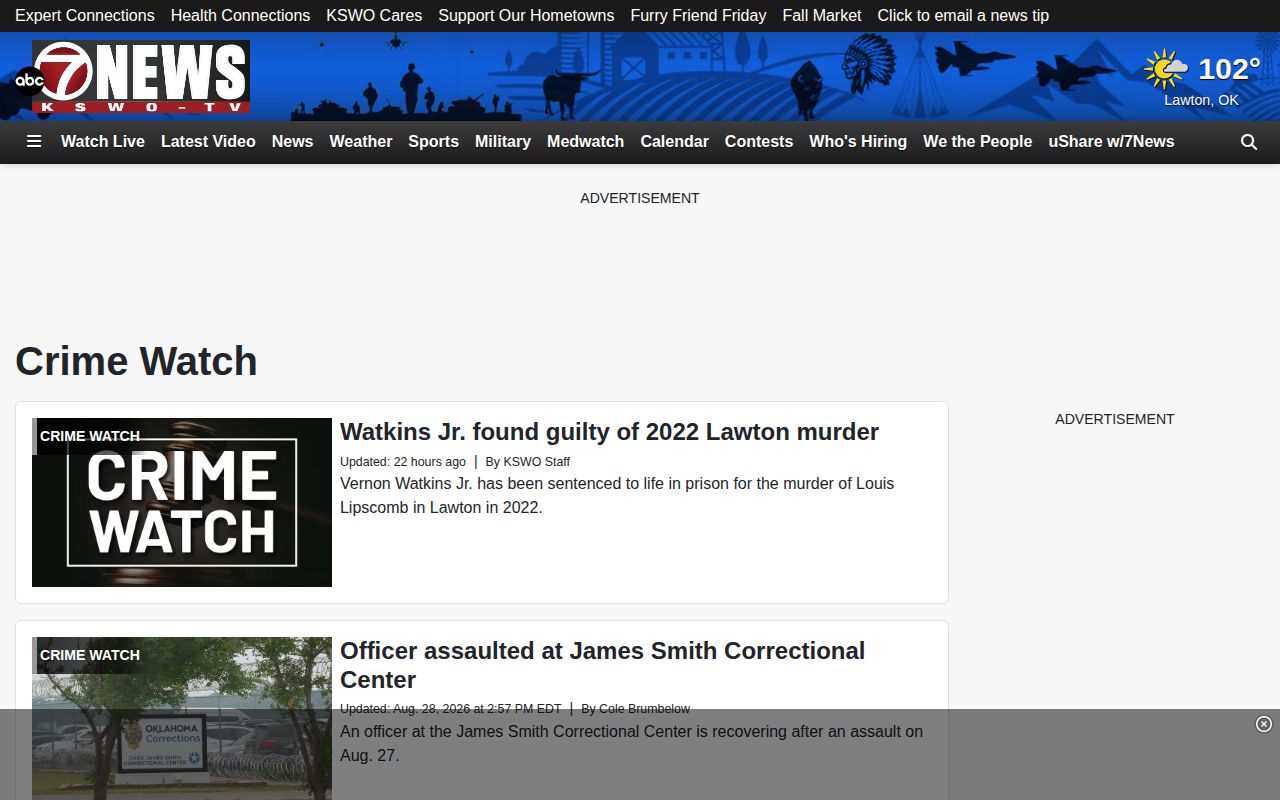
KSWO's story pages show what was reported. For the booking behind the headline, official records hold the answer.
Comanche News Source Types
The table puts primary agency and court routes first. Editorial and private indexes come second. That order matters. A source can print a name, image, or charge text without being a live jail locator. When a result involves a particular person, compare its date and agency against the CCDC portal and the court record.
| Outlet or source | Coverage | Photo use | Where it leads |
|---|---|---|---|
| CCDC Current Inmates | Current and recent county custody | May display when supplied | Official detention page |
| Sheriff Press Releases | Selected agency announcements | Not a booking archive | Sheriff source |
| KSWO Crime Watch | Selected southwest Oklahoma news | Editorial and story-specific | Crime Watch |
| SWOK News | Local editorial coverage | Varies by story and access | News section |
| RecentlyBooked, Arrests.org, Mugshots Zone | Private recent or archive indexes | May reproduce photos | Unofficial, incomplete, or stale |
The Lawton Constitution has deep local roots. Its current coverage runs under SWOK News. No dedicated public booking or mugshot feed exists there. KSWO stays editorially selective too. Neither newsroom replaces the current-inmate roster when you need to know who is actually held.
Comanche Booking Photos in News
A newsroom photo often starts life in a police or detention file. Printing it is an editorial choice. KSWO has run confirmed stories built on CCDC booking information and police material. Still, the jail does not publish a photo for every booking. A media story can also lag behind a changed charge or a release. The county's BlueHorse layout includes an image area, but a public photo result is not something to count on.
Oklahoma's Open Records Act folds photographs into its broad record definition. It opens access to law-enforcement and booking material that agencies maintain, subject to exceptions and redactions. The law does not force an agency to create a new image. It does not require every field filled in. Nor does it keep a vendor display online forever. For the result of a filed matter, the court disposition is the source that counts.
Note: A photo in a news story documents what the outlet reported at that time, not whether a person remains in custody.
Comanche Story Record Path
A news article is usually just the first public trace of an event. Before searching any record, match the story's date, location, and agency. CCDC covers current and recent county detention, not every city arrest or old case. If the story names Lawton Police, Cache Police, Elgin Police, or the Sheriff, that agency likely holds the initial report. Once a case is filed, the docket and court copies tell you what happened next.
- Read the source line and note the reporting agency, date, and any case or booking number.
- Use the Comanche custody and booking path to check CCDC when the person may be in county custody.
- Contact the arresting agency for a report or the correct records-request route if CCDC does not show the person.
- Search OSCN for a Comanche County District Court filing, or Lawton Municipal Court where city jurisdiction applies.
- Use the final docket, order, or certified Court Clerk record to understand the disposition.
Important: Charges can change, be reduced, or be dismissed once a case reaches court, so always confirm the outcome in the official record.
Comanche Private News Indexes
Private sites keep county and city-tagged collections of their own. RecentlyBooked's Comanche section sticks to a recent-record window. Arrests.org sorts its county pages by date and agency. Mugshots Zone adds dated material plus month archives. None of these are official CCDC feeds. A page can stay visible long after a release. Some entries carry copied charge text that a later filing overturned.
Need Lawton-specific archives? The Busted Newspaper Lawton tag is another secondary option. It can help you pin down a date or agency to check. Still, the city label does not make it a government feed. Verify anything you find there through the jail, the agency records office, or the court.
Comanche Booking Feed Boundary
No official countywide daily arrest-photo feed exists for newsrooms to mirror. CCDC's BlueHorse Books 24hr option is the closest official recent-booking window. The Sheriff's Press Releases page posts incident news instead of a maintained arrest log. That gap explains a lot. A KSWO story can be timely yet selective. A private archive can look broad while saying nothing about present custody.
Treat the date on a story or index page as a publication clue only. It cannot tell you when the jail posted a record. It can't say whether a person is still held, or what a court later decided.
Comanche News Custody States
Comanche News Custody States is not needed here; the substance matters. An arrest, a release, a charge, and a sentence are four different things. Headlines blur them together. The CCDC live roster only shows current and very recent Comanche County custody, so a person who walked free yesterday may already be gone from the screen while their court docket grinds on for months. Someone serving a state sentence belongs in the ODOC lookup instead. Federal or immigration detention calls for a federal locator. Matching the custody state to the right source is what keeps an old headline or archived booking image from being mistaken for proof someone sits in jail today.
Comanche Editorial Selectivity
KSWO's Crime Watch covers plenty of ground. It still isn't a copy of the CCDC roster. Editors there pick stories based on news value, agency releases, court documents, interviews, and ongoing investigations. One story might run a booking photo. The next might skip images entirely. Coverage can stretch across Lawton, Elgin, Cache, Indiahoma, or the whole county. A missing story proves nothing. Silence about an event doesn't mean it never happened.
The Lawton Constitution, a long-running daily, is another local option now reachable through SWOK News. It offers no confirmed daily mugshot gallery or steady booking feed. Photo use and posting pace shift from story to story. Treat both outlets as editorial leads that point you toward the responsible agency rather than replacements for agency data.
Comanche News Court Followup
Want to know what happened after a Lawton arrest made the news? OSCN is the place to look. Choose Comanche County on the district court side, then search by a party name or case number. The docket will show what the court actually did: a filing, an arraignment, bond, motions, a plea or trial, a dismissal, sentencing, probation, or anything filed later. Skip OSCN for city matters, though. Traffic misdemeanors and ordinance violations belong to Lawton Municipal Court, which keeps its own records.
When a docket line is not enough, the Court Clerk’s request instructions explain how to get copies or certified records. A certified final disposition also matters if you need an OSBI criminal-history record updated. Check the right jurisdiction first, since a name that appears in a booking may or may not show up in the same court file.
Comanche Archive Date Limits
Private indexes can look like a seamless daily archive. Their dates don't tell you when CCDC first posted anything. An August page might recycle an older booking or reflect a delayed upload. Some entries sit there long after a release. A newsroom story posted online raises the same concern, since the case may have moved on since publication. Always note the source date. Then weigh it against official custody, agency, and court records.