
Comanche Busted Booking Records
Every Comanche County booking record starts the same way. An arresting agency brings a person to the jail, and the intake process captures what is known right then: who the person is, which agency made the arrest, the booking date, and the charge listed at intake. If a booking photograph is taken and kept, it becomes part of that same record. For the official source, skip the photo galleries. The real route runs through the Comanche County Detention Center, or CCDC, whose public portal is labeled Current Inmates and works best for people in custody now or very recently.
Read these records with care. Charges listed at booking can change later, and a roster entry may vanish once someone is released or moved. The court file holds the answers about how a case actually ended.
Important: A booking image or charge marks an intake event only; the court disposition is the record that shows the outcome.
Comanche Booking Record Fields
CCDC uses a BlueHorse layout. Each entry is organized around identity, intake, location, and release details. Fields can sit empty, redacted, or just plain unavailable for a given booking. So treat them as a tool for telling one booking apart from another, not as a full case history. A vendor layout with room for sensitive contact details does not mean those details should be copied or passed along.
| Field | What it helps show |
|---|---|
| Booking and jacket numbers | Numbers used to distinguish the jail intake record from another person with a similar name. |
| Book and release dates | When the visible detention record began and, when supplied, the recorded release transition. |
| Arrest agency | Whether the underlying report may be held by Lawton, Cache, Elgin, the Sheriff, or another agency. |
| Facility placement | Current placement information such as building, pod, cell, or bed when the facility displays it. |
| Charge and bond data | The booking-time charge or status data, not a court finding or final disposition. |
| Image area | A space that may display a facility-supplied image, not a promise that every result has a public photo. |
Other labels may cover physical description, prior-booking indicators, state or federal identifiers, and the arresting agency. Names alone can be ambiguous. The smarter approach is to compare the booking date, the agency, and a known identifier side by side. Court records serve a different purpose entirely. They show what was filed and what happened after the booking.
- Booking
- Jail intake after an arrest or commitment, with identity and custody details recorded at that time.
- Arraignment
- An early court appearance where the case and procedural rights are addressed.
- Bond
- A court-authorized condition or amount connected to release while a case proceeds.
- Disposition
- The court’s later result, such as dismissal, plea, acquittal, or sentence.
- Expungement
- A legal process that can affect an arrest record when current law and eligibility allow it.
Comanche Busted Records Requests
First, figure out who holds what you want. CCDC keeps detention and booking material. The Sheriff's Records Division keeps reports and warrant records created by that office. A city police department may hold the original arrest report or a photo in its own case file. No county or Sheriff source publishes a dedicated online booking-photo form, a CCDC photo-copy price, or a promised response time. Expect to ask. Request a specific record that already exists, not a new report or an opinion about the case.
- Write down the full name, approximate arrest or booking date, arresting agency, and booking number if it is known.
- Ask CCDC at 580-250-1902 for the detention or booking-record path. Ask Sheriff Records at 580-353-4280 for a Sheriff-created report, warrant record, or department-held photograph.
- State that the request seeks a copy of the existing record or booking photograph and ask which custodian or vendor holds it.
- Request the current fee schedule, an estimated completion date, and the specific legal basis for any withholding or redaction.
Oklahoma's Open Records Act provides the legal framework here. Photographs and data both count as records under the Act, though redactions and law-enforcement exceptions apply. The Attorney General's law-enforcement records overview notes that jail registers and booking information may be available where they are kept. The law stops short, though. It never forces an office to create a record or to preserve an online vendor display forever.
Oklahoma Mugshot Record Law
Public access has its limits. Oklahoma law permits exemptions and redactions for juvenile material, protected victim information, mental-health content, and unneeded personal identifiers. The question is always whether a custodian may release a maintained record, never whether every field should be republished. If something is withheld, ask the agency to name the exemption and whether the rest can be released.
No Oklahoma statute numbered as a mugshot anti-removal-fee law appears in the current official Title 15 compilation. Earlier bills like SB 1530 and SB 379 were proposals or legislative history, not an enacted removal right. Corrections begin with CCDC, Sheriff Records, or the arresting police agency. A certified final disposition from the Court Clerk or municipal court can support an OSBI update. The OSBI expungement information separates an arrest-record expungement from a deferred-dismissal update.
Private listings are a separate matter. Correct the official record and secure court paperwork first, then use a site's current free correction policy. RecentlyBooked, Mugshots.com, and Mugshots Zone each described a no-charge documented review route. But a private policy is not a court order, and it can change. A single request will not scrub every cache or archive. Treat any demand for payment to alter a record with suspicion. Check it against current law, the Attorney General, and qualified legal help.
Note: Eligibility, fees, and legal effect for sealing or expungement depend on the current record and should be verified with the court, OSBI, or legal counsel.
Comanche Booking Custodians
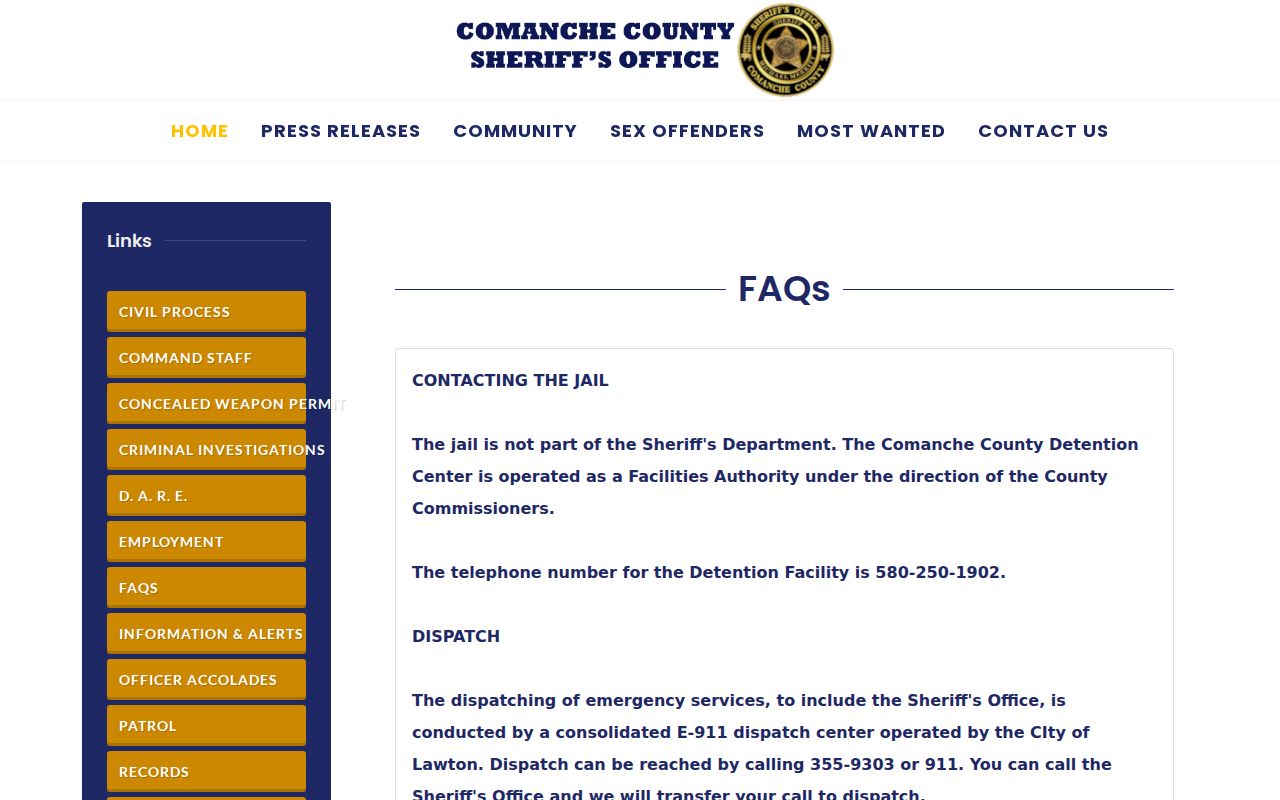
One local quirk matters a lot here. The Sheriff FAQ states that CCDC is a Facilities Authority under the County Commissioners, not part of the Sheriff's Department. That split can decide where your request belongs. CCDC comes first for detention intake and jail booking records. Sheriff Records handles Sheriff-created reports and warrant records. Lawton, Elgin, and Cache police departments may hold the initial arrest report when their officers made the bust. The Sheriff's official FAQ explains the facility relationship. Read it before a request goes to the wrong office.
A strong request names the agency, the record type, the date, and any known booking number, then simply asks that custodian for its current procedure.
Comanche Bond Release Timing
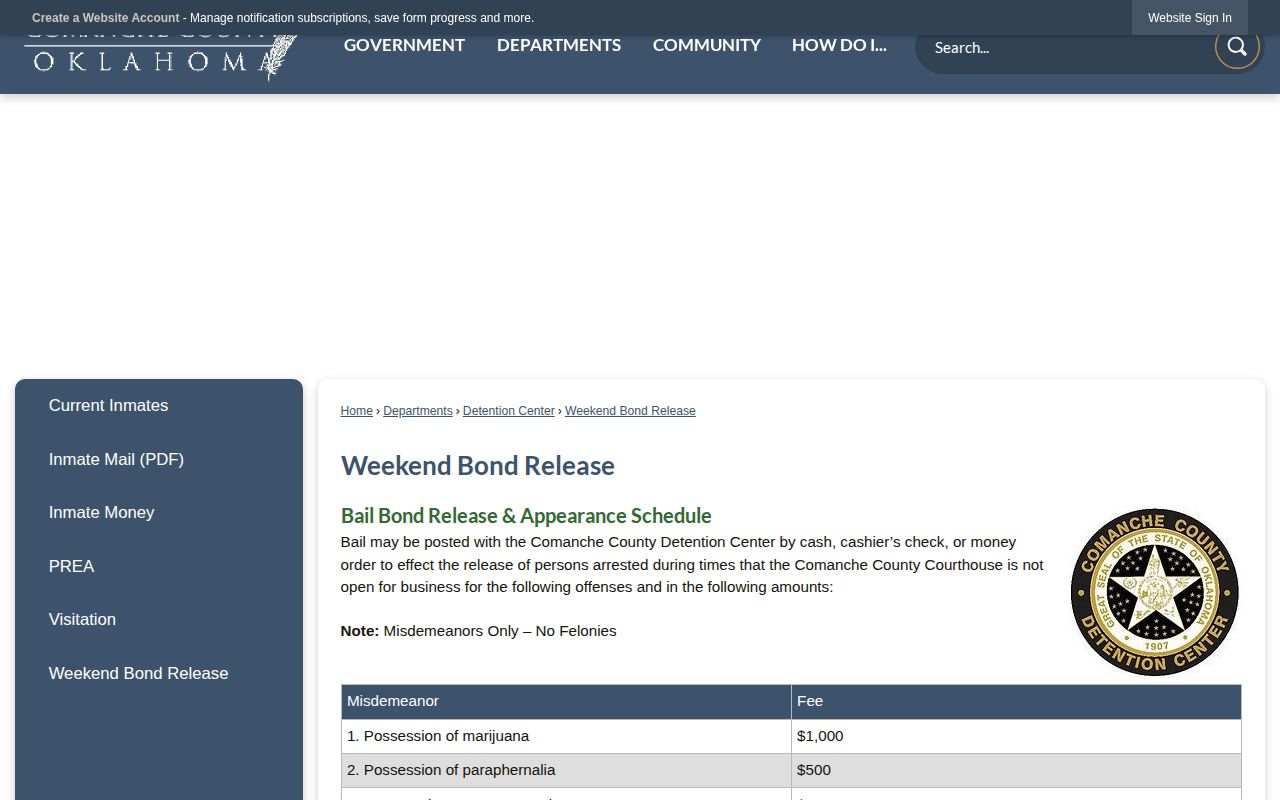
A roster entry and a release are two different events. The county treats them that way. Comanche County runs an official Weekend Bond Release page covering appearance and bail-bond release details. That page explains why a name may still show up while bond paperwork is worked out, or why it vanishes once a release goes through. So a current-inmate result is a snapshot of custody, nothing more. It won't tell you when someone walks out the door.
Want a real answer on someone's status? Call CCDC directly rather than trusting an older search result.
Comanche Arrest Reporting Limits
Lawton Police Technical Services assigns a department statistician to compile monthly offense and arrest reports from UCR material. No public monthly report URL exists. There's also no countywide arrest total to cite. An internal compilation like that doesn't create a daily booking feed anyone can check. For recent bookings, CCDC's 24-hour search is the closest official view.
Comanche Custody Beyond CCDC
Custody in Comanche County doesn't always mean a bunk at 315 SW 5th Street. The January 5, 2026 commissioner minutes confirm it. Inmates get housed in other counties under agreement. Keep that in mind when a name doesn't show up where you expect. Someone missing from the CCDC roster might be released. Or held by a city, transferred, housed elsewhere, or in another agency's hands.
Before assuming a record vanished, ask one plain question: which facility has this person right now? The CCDC phone answers one piece. The arresting agency, the OSCN docket, VINE alerts, and a formal records request each answer a different piece of that puzzle. Use them together.
Finding Comanche Busted Arrests
Start with custody status, not a name search across random sites. The official CCDC page opens the current-inmate roster. That's the first stop for anyone booked into county detention. When a person isn't there, call the agency that made the arrest next. Skip the unofficial archives. Lawton, Cache, and Elgin each keep their own police records. Court files matter once a case is filed. State and federal locators cover separate systems and won't work as a county booking feed.
- Open the official CCDC Current Inmates link and search a last name, then add a first name, date range, or known identifier.
- For a fresh arrest, use the BlueHorse Books 24hr option and compare the booking date, arrest agency, and release field.
- When CCDC has no result, contact the arresting police department or Sheriff Records to ask for its own record route.
- Use OSCN for Comanche County District Court dockets, or Lawton Municipal Court when the matter is in city jurisdiction.
- Use ODOC only for a person who has moved into state-sentenced custody, and use federal tools only when federal or immigration custody is the relevant question.
No verified Sheriff app publishes CCDC booking photos. The county relies on a web roster. Prodigy Solutions handles visitation, messaging, and phone calls. Oklahoma VINE offers confidential custody-status alerts. It is not a photo or court-record service, though. Confirm participation and current status in the live service before counting on a notification.
Where Comanche Mugshots Appear
Start with official sources, because they tell you what kind of record you're looking at. The CCDC portal sometimes shows an image. That depends on whether the facility or its vendor supplies one, so a photo isn't guaranteed on every result. The DOC's institutional-photo process is a different animal from a county booking shot. A court docket typically resolves a case without ever displaying a jail image. Secondary pages can help track down an older record. Just remember they prove nothing about present custody, official accuracy, or how a case ended.
| Channel | Photo status | Custody or record scope | Access |
|---|---|---|---|
| CCDC Current Inmates | May display when supplied | Current and recent county jail intake | Official county page |
| Arresting agency records | Request when releasable | Initial police or Sheriff record | Ask the agency that made the arrest |
| ODOC Offender Lookup | Public display not guaranteed | State-sentenced custody or supervision | Official ODOC lookup |
| OSCN and Court Clerk | Not a photo source | Filed case and disposition | Official docket search |
| KSWO Crime Watch | Story-specific editorial use | Selected local news, not every booking | KSWO Crime Watch |
| RecentlyBooked and Mugshots Zone | May reproduce images | Private recent or archived indexes | Unofficial and potentially stale |
Plenty of sites host Comanche County booking photos. RecentlyBooked, Mugshots Zone, Arrests.org, Mugshots.com, and the Busted Newspaper Lawton tag all republish jail data in one form or another. None of them runs the show. A mugshot can linger after someone walks free, a fresh arrest might not show up for days, and some entries simply go missing. Treat these as starting points. Before relying on anything you find there, confirm the details with the Comanche County Detention Center, the agency that made the arrest, or the court handling the case.
Comanche Busted Roster Search
The public CCDC roster runs on the BlueHorse interface. You reach it from the county Detention Center page. It's a current-inmate tool with a recent-booking window, not a full historical archive. Search a last name first, then narrow from there. Match the arrest agency and booking date before deciding you've found the right person. The facility promises no set refresh interval, no blanket photo policy, and no fixed window for how long an entry stays visible after release.
The official Detention Center page is the source for the interface shown below. Its Current Inmates link searches facility custody, not every arrest in Comanche County.
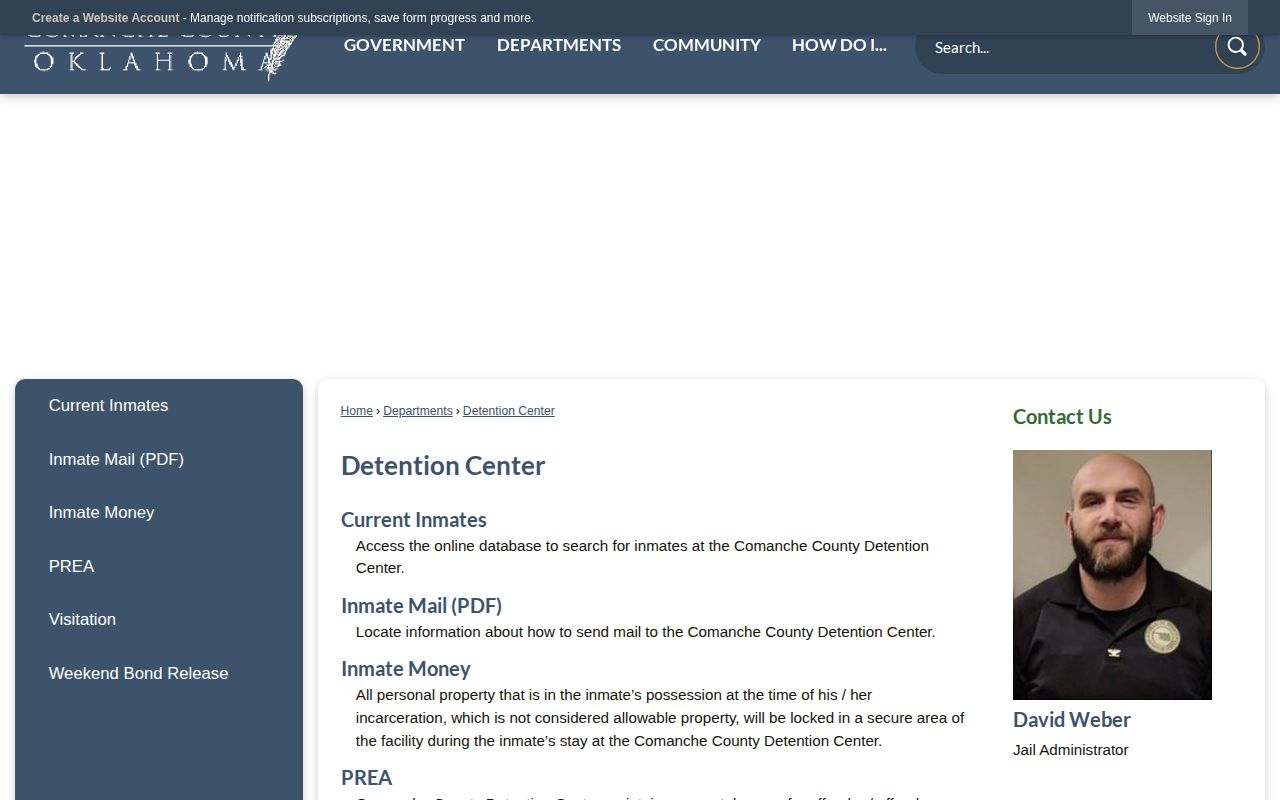
The county page supplies the custody context behind the roster. Check it again whenever a search comes back empty or an image field is blank.
| BlueHorse field | Use in a Comanche search | Notes |
|---|---|---|
| First and last name | Start with the surname, then narrow | Try reasonable spelling variants. |
| Permanent ID or State ID | Match a known identifier | Useful where names are common. |
| Start and end date | Limit a recent search window | Does not make the portal a full historical archive. |
| Books 24hr | Review recent booking activity | Closest verified official same-day view. |
| Detail fields | Compare booking, release, agency, and image area | Not every field is completed for every entry. |
Note: The public interface has an image area, but photographs may or may not display, since no photo is guaranteed on a result.
Can a blank CCDC search prove there was no arrest? No. The person could be in city custody, transferred, released, housed elsewhere, not yet posted, or tied to a record held by the arresting agency instead.
Recent Comanche Booking Windows
For the freshest booking news, the BlueHorse Books 24hr option is the nearest official route. An arrest will not always show up right away, though. Identification, data entry, photo upload, and vendor sync can all lag behind the actual arrest. So jot down when you searched. That matters more than calling any list complete or live.
No CCDC or Sheriff blotter exists for 72-hour, weekly, or released-inmate windows. The Sheriff Press Releases page covers incident news, not a daily booking archive. Looking for someone older or already released? Ask the custodian for the booking record, then follow the case through OSCN or the Court Clerk. Treat private archive dates as publication dates only.
Comanche State Custody Records
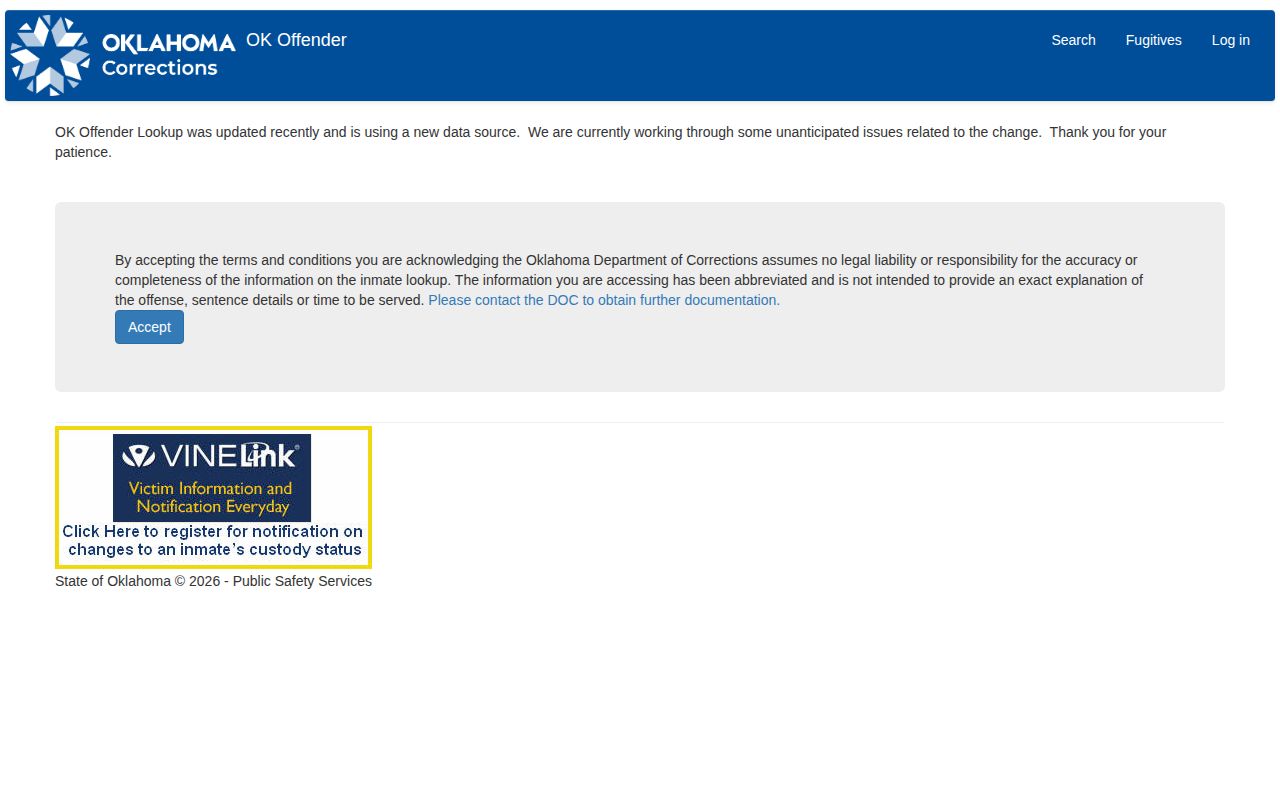
The Oklahoma Department of Corrections Offender Info page opens the state lookup. It covers people sentenced to state custody or folded into the DOC system elsewhere. A county booking search it is not. Someone arrested in Lawton, Elgin, or Cache could be out on release, sitting in county custody, or waiting on court dates without ever landing in an ODOC result.
Institutional photos get taken at reception and refreshed under ODOC policy. That is a state photo process, not a promise that every public profile shows one, and never a substitute for a county booking photo. The lookup runs on conviction date, court, facility, term codes, and statute codes. Save it for after the question shifts from county booking to state sentencing. The official ODOC lookup is the source for that step.
State records can explain a sentence and custody status. They still don't replace the CCDC intake record or the court's final docket.
Comanche Busted Custody Changes
Custody shifts fast. Every official channel covers a different point on the path, so one source rarely tells the whole story. A person might be freshly booked at the CCDC, out on bond, transferred, sentenced to ODOC, or held in a federal or immigration facility. If the roster shows no entry, read that plainly: the person just is not on the current roster at that moment. Nothing more.
| Status to check | Primary route | What it does not prove |
|---|---|---|
| Current or very recent CCDC booking | BlueHorse Current Inmates and Books 24hr | Final court outcome or every past booking. |
| Released, transferred, or older booking | CCDC or arresting-agency records request | That an unofficial archive is current. |
| Filed state or municipal case | OSCN, Court Clerk, or Lawton Municipal Court | Current jail location. |
| State-sentenced custody | ODOC offender lookup | A fresh Comanche County arrest. |
| Federal or ICE custody | BOP or ICE locator when applicable | County booking details or a public photo. |
Comanche Busted Court Paths
Booking is only the start. The case record may live in more than one court system afterward. OSCN opens the public search for Comanche County District Court dockets, where you can trace a filing, arraignment, bond, motions, plea, dismissal, acquittal, or sentencing. Lawton Municipal Court handles city ordinance and traffic misdemeanor matters on its own separate track. Keep in mind that a booking charge does not always match what gets filed in court.
Need the paper? The Comanche County Court Clerk takes district-court record requests and charges $1 for the first page, then $0.50 per additional page. Requests should include a case number or year, party names, a document description, certification choice, payment, and a self-addressed stamped envelope for mail returns. Find the office at 315 SW 5th Street, Suite 504, Lawton, OK 73501, or call 580-355-4017. Court documents live here, not CCDC photos. For the docket itself, the OSCN court search is the next official stop after a booking record.
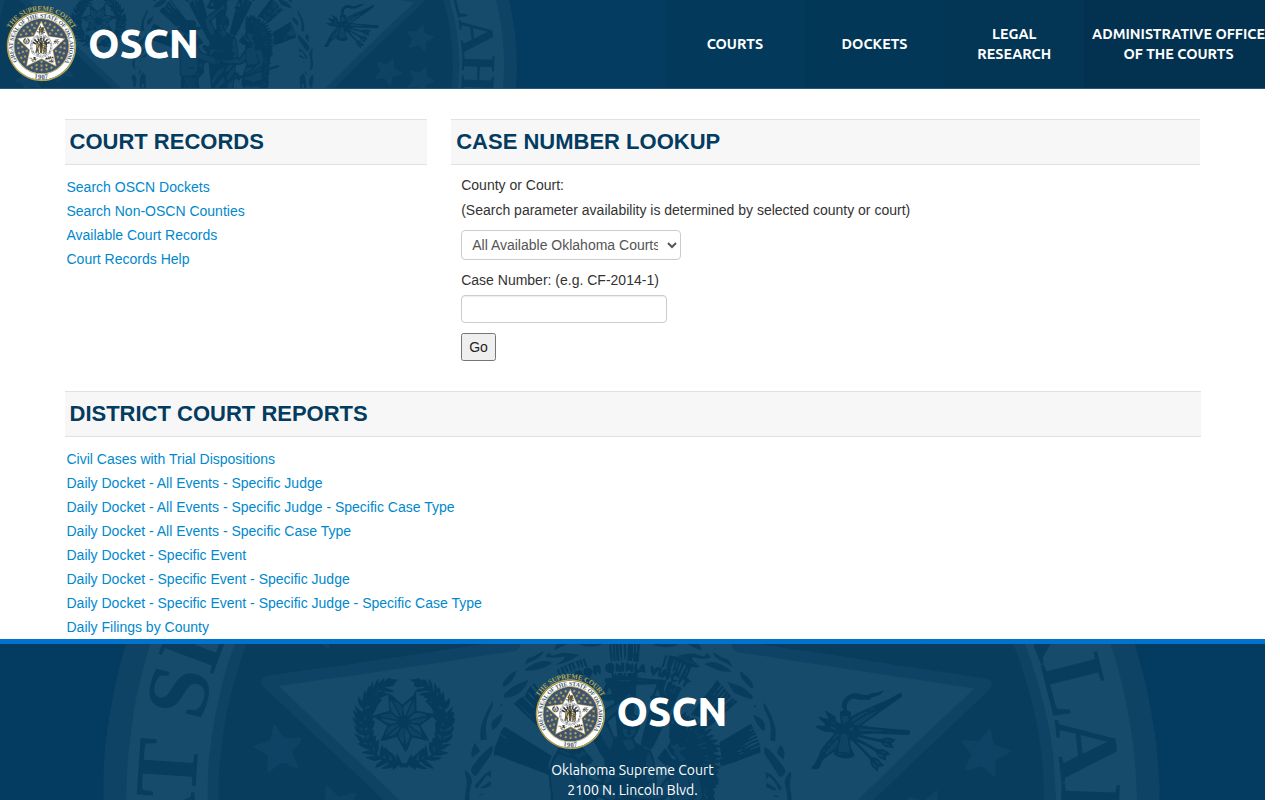
Tracking the case from arraignment through disposition tells you far more than an arrest date ever will.
Comanche Busted City Records
City arrest records don't all start or end at one desk. Three city routes sit below, each keeping police records apart from county detention records. Every city page lists the local records contact, notes where no public blotter exists, and points to local news. The CCDC only becomes relevant once someone was transferred or committed into county custody.
- Lawton Busted Mugshots: Lawton Police may hold the initial report, while CCDC may hold a later county detention record.
- Elgin Busted Mugshots: call the Police Department’s listed number for the current records custodian when an official online feed is absent.
- Cache Busted Mugshots: Cache Police has a documented Records Division and fee route even though it does not publish a daily photo feed.